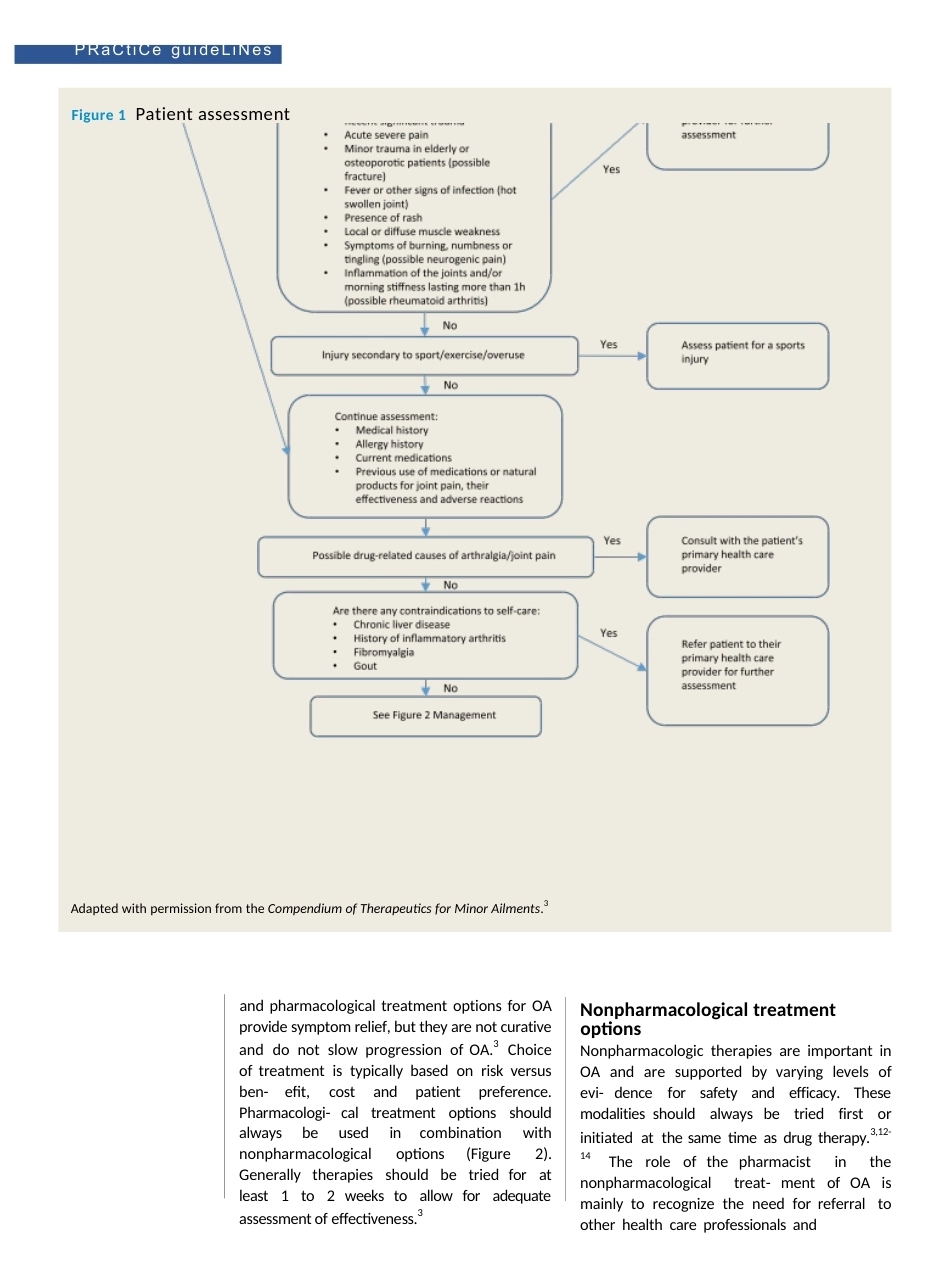
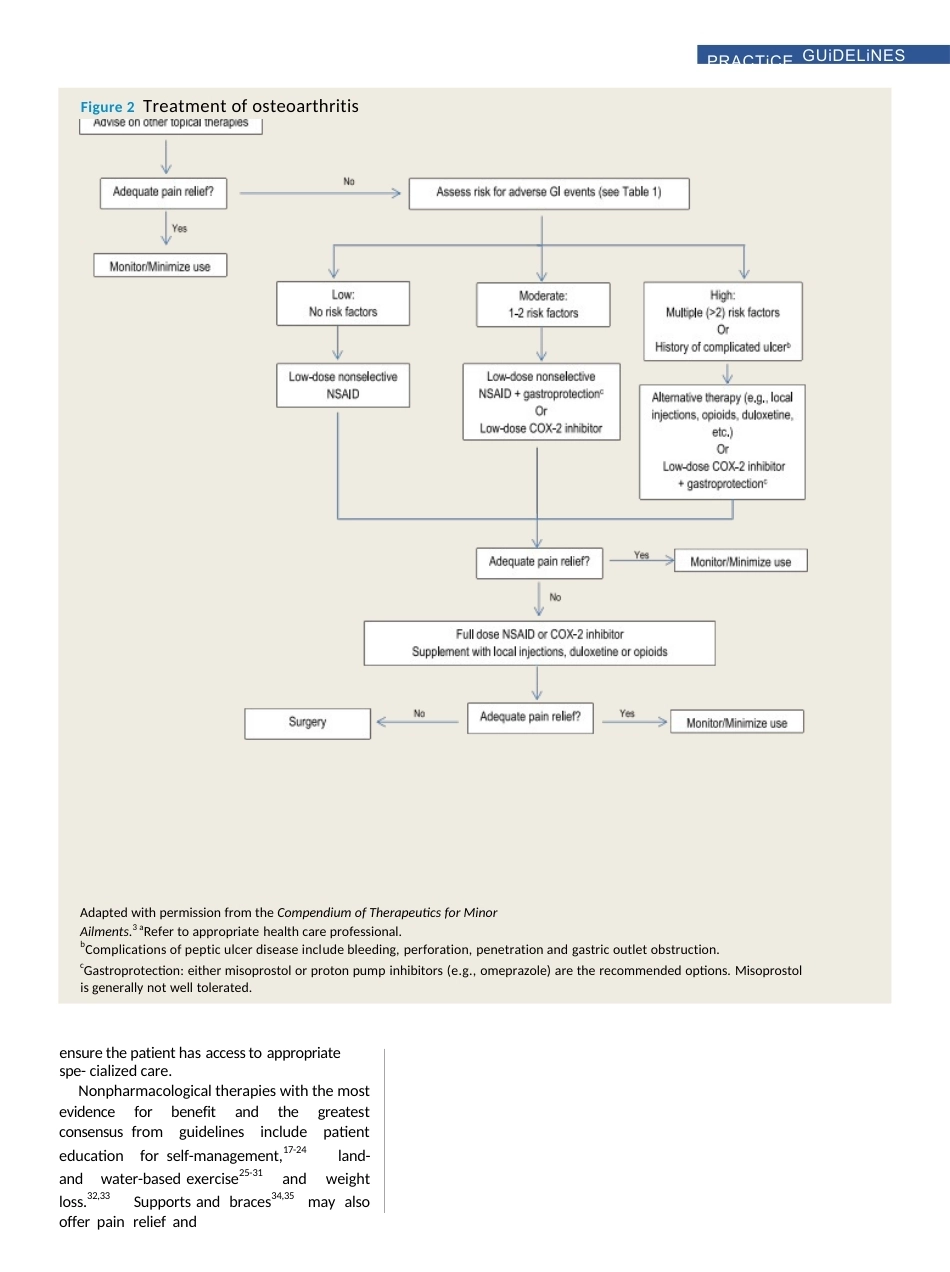
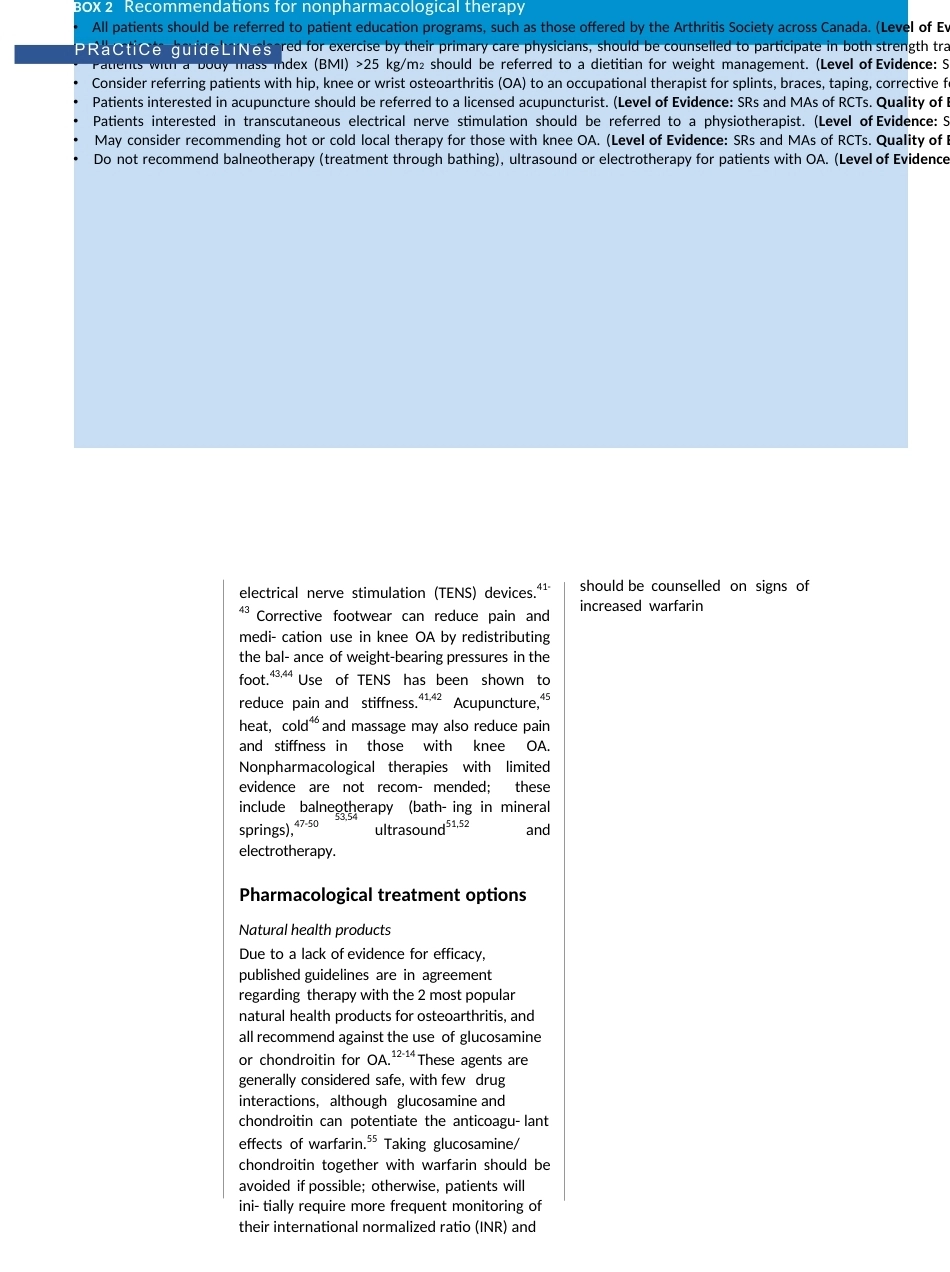
PRACTICE GUIDELINES PeeR-ReViewedPractice guidelines for pharmacists: The management of osteoarthritisJason Kielly, BSc(Pharm), PharmD; Erin M. Davis, BSc(Pharm), PharmD; Carlo Marra, PharmD, PhD, ACPR, FCSHPOsTEoARTHRiTis (OA) is THE mosT commoN form of arthritis, affecting more than 1 in 8 Cana- dians.1 With an aging population, the prevalence of OA in Canada is rising. From 2010 to 2031, the prevalence of OA is projected to increase from 13.8% to 18.6%, with the total direct costs projected to increase from $2.9 billion to $7.6 billion, an almost 2.6-fold increase.2 OA has traditionally been thought to be a progressive disease of the synovial joints that is due to daily “wear and tear” from excessive and repetitive force on joint cartilage. While this is partially true, OA is now believed to be a systemic disorder due to an imbalance between joint destruction and repair.3-6 The result is a break- down of cartilage and bone, leading to symptoms of pain, stiffness and functional disability.The joints most commonly affected by OA (in order of prevalence) are the hands, knees, hips and spine. OA is more prevalent with age, affecting nearly half the population older than 70.3 In addition to advancing age, female gen- der is a significant risk factor. Other risk factors include obesity, quadriceps muscle weakness, family history, joint injury and joint overuse or injury (e.g., participation in certain sports).3,7Evidence for pharmacist care in OAPharmacists are frontline, accessible health care professionals who see patients 5 times more fre- quently than family physicians.8 Community pharmacists have proven they can address gaps in OA patient care. Many people with OA are not diagnosed and are not re...