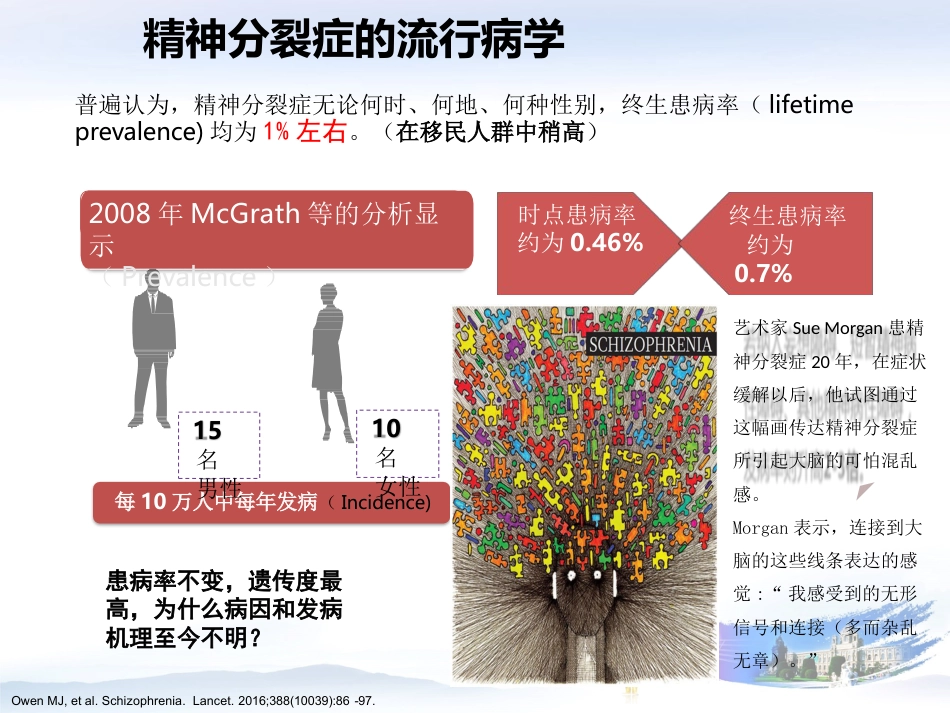
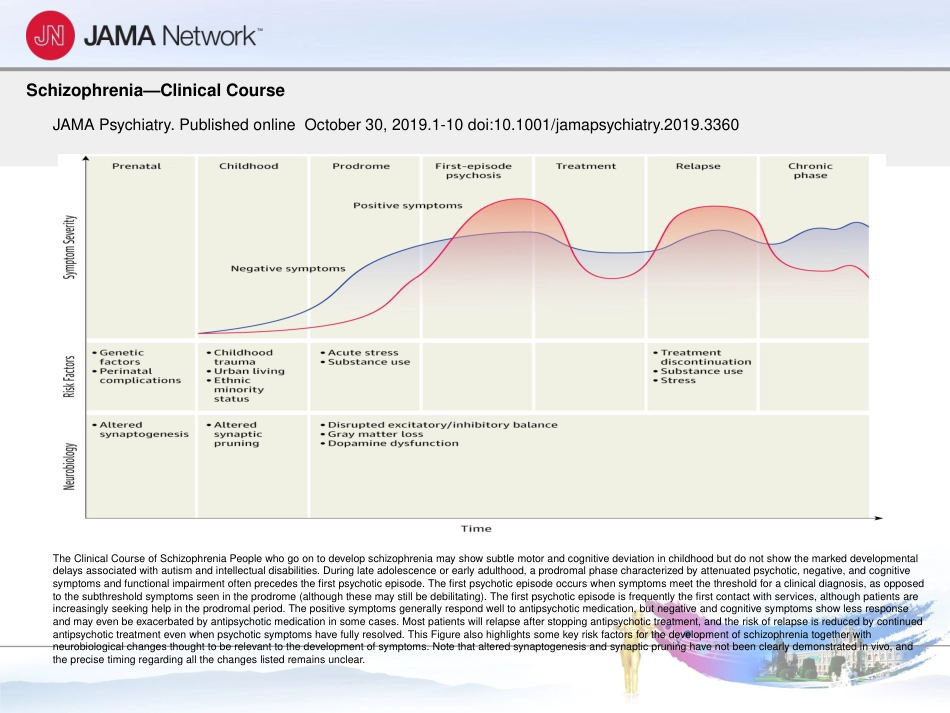
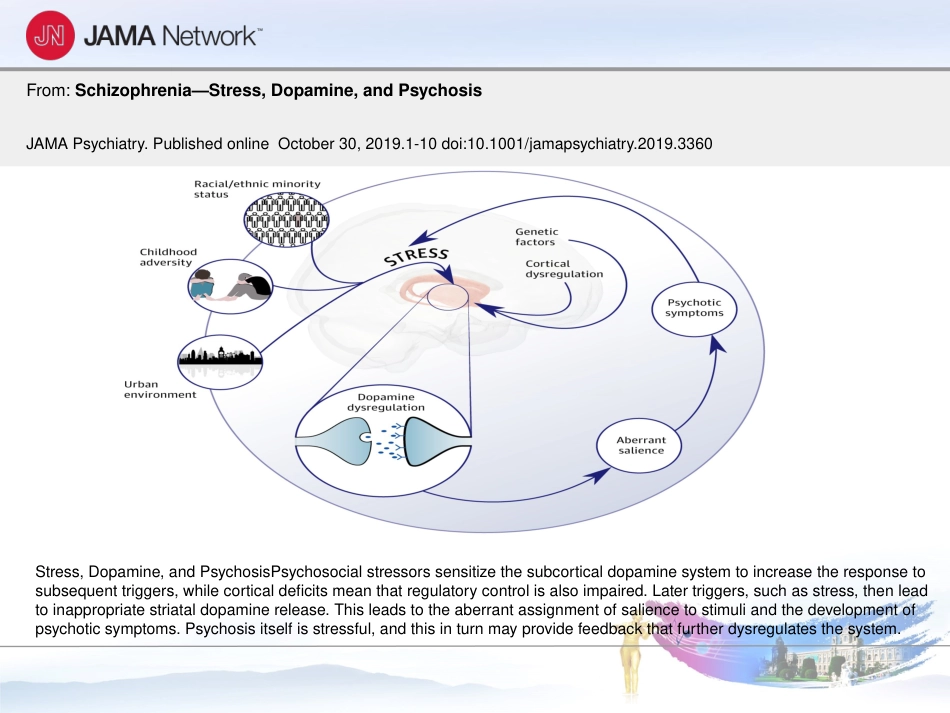
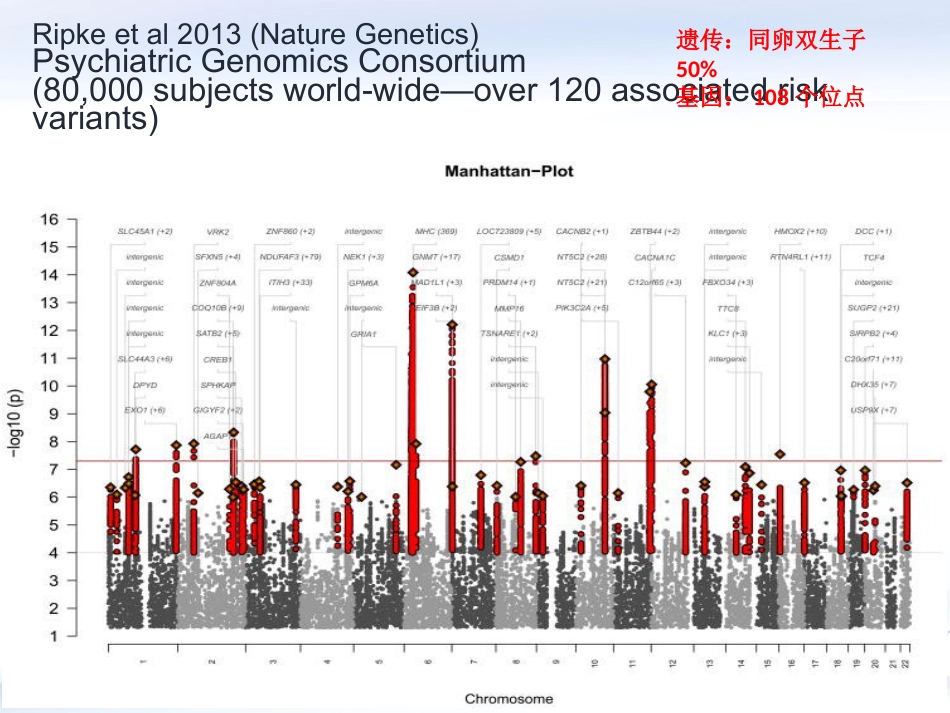
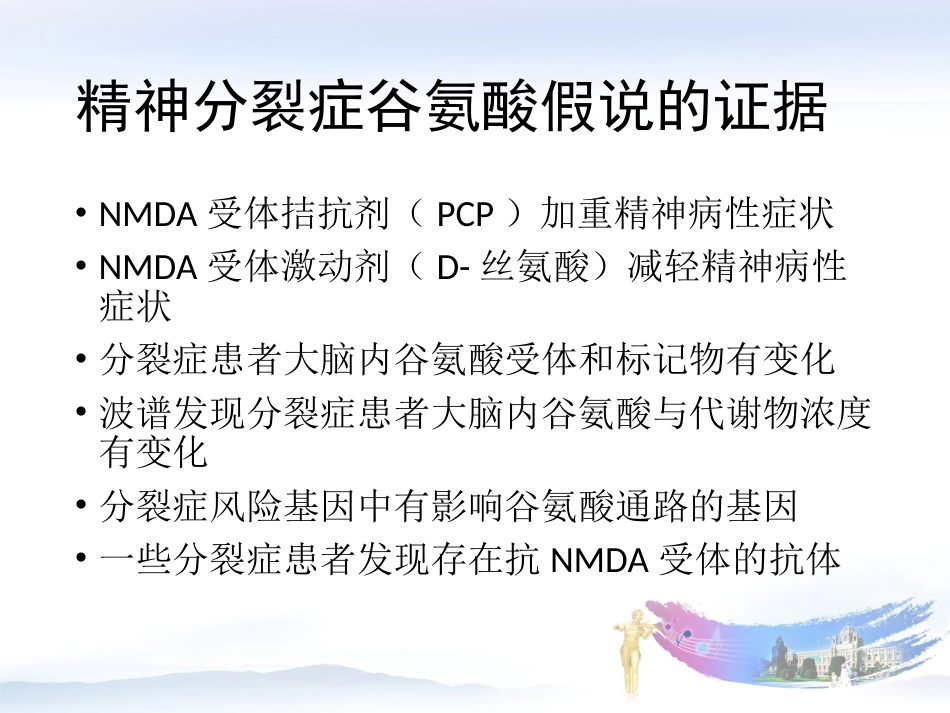
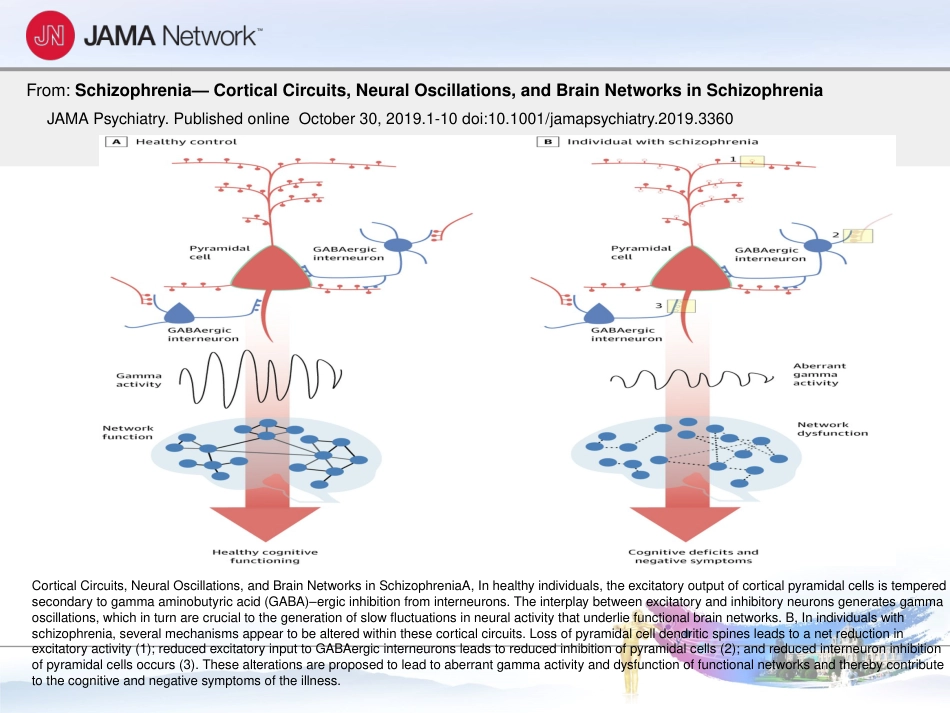
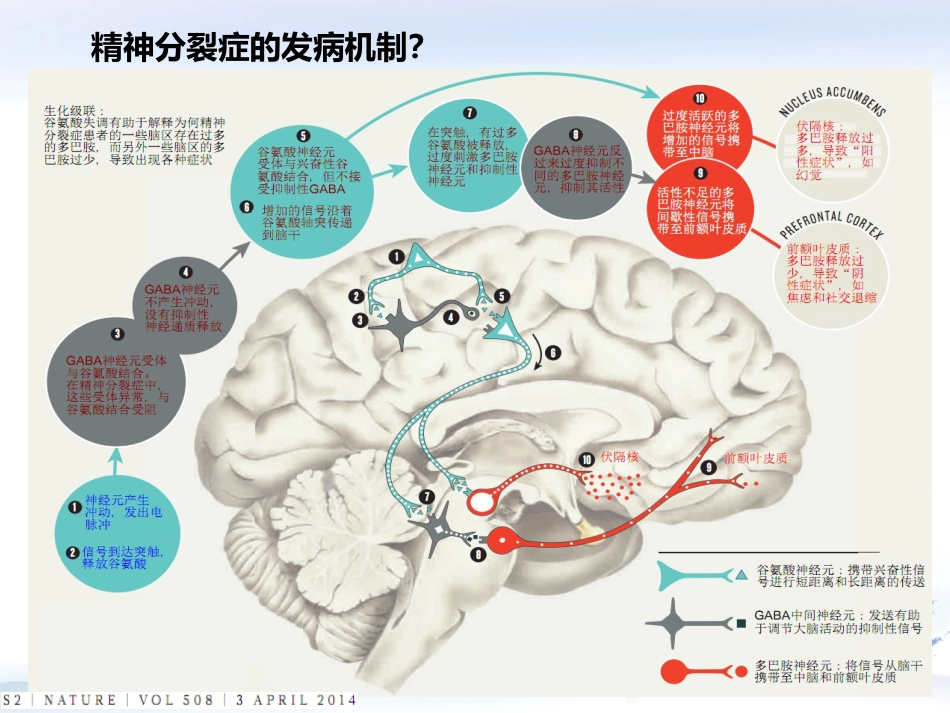
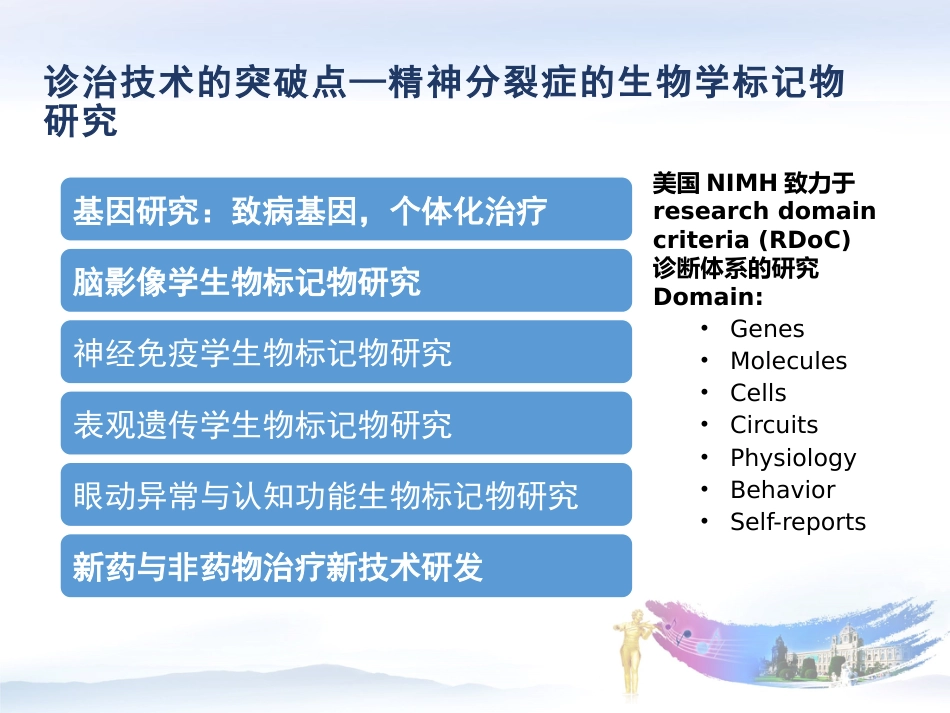
精神分裂症诊疗新进展精神分裂症的流行病学时点患病率 约为0.46%终生患病率 约为0.7%每10 万人中每年发病(Incidence)艺术家Sue Morgan 患精神分裂症20 年,在症状缓解以后,他试图通过这幅画传达精神分裂症所引起大脑的可怕混乱感。Morgan 表示,连接到大脑的这些线条表达的感觉:“ 我感受到的无形信号和连接(多而杂乱无章)。”普遍认为,精神分裂症无论何时、何地、何种性别,终生患病率(lifetime prevalence) 均为1% 左右。(在移民人群中稍高)2008 年McGrath 等的分析显示(Prevalence )15名 男性10名 女性Owen MJ, et al. Schizophrenia. Lancet. 2016;388(10039):86 -97.患病率不变,遗传度最高,为什么病因和发病机理至今不明?Schizophrenia—Clinical CourseJAMA Psychiatry. Published online October 30, 2019.1-10 doi:10.1001/jamapsychiatry.2019.3360The Clinical Course of Schizophrenia People who go on to develop schizophrenia may show subtle motor and cognitive deviation in childhood but do not show the marked developmental delays associated with autism and intellectual disabilities. During late adolescence or early adulthood, a prodromal phase characterized by attenuated psychotic, negative, and cognitive symptoms and functional impairment often precedes the first psychotic episode. The first psychotic episode occurs when symptoms meet the threshold for a clinical diagnosis, as opposed to the subthreshold symptoms seen in the prodrome (although these may still be debilitating). The first psychotic episode is frequently the first contact with services, although patients are increasingly seeking help in the prodromal period. The positive symptoms generally respond well to antipsychotic medication, but negative and cognitive symptoms show less response and may even be exacerbated by antipsychotic medication in some cases. Most patients will relapse after stopping antipsychotic treatment, and the risk of relapse is reduced b...